
Twilio Content Template Message
This page describes where and how to use Twilio Content Template Message.
What is a Twilio Content Template Message
Section titled “What is a Twilio Content Template Message”A Twilio Content Template Message is a type of message that allows you to send structured content, such as images, buttons, and text, to users via the Twilio platform, when building multichannel Scenarios. It is particularly useful for sending rich media messages that enhance user engagement.
This message holds a reference to the Twilio Content Template that is used to render the message. The Content Template can be referenced by its unique identifier, sid or by the name of the template. The message can also include additional parameters that are passed to the template for rendering. Here’s the relevant Twilio documentation for Content Templates.
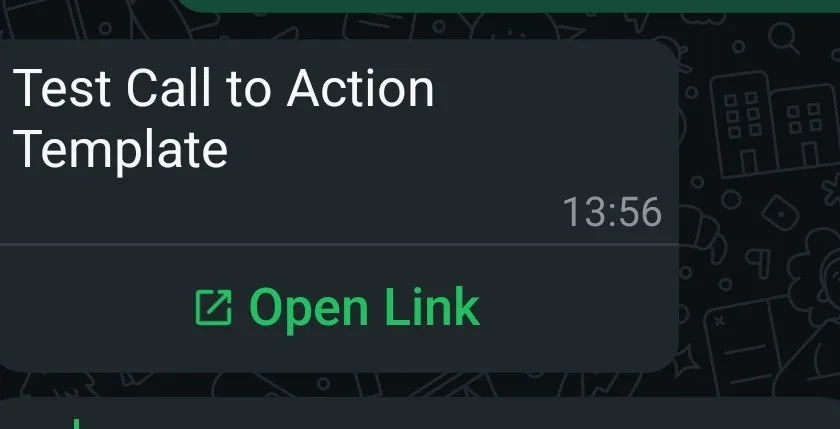
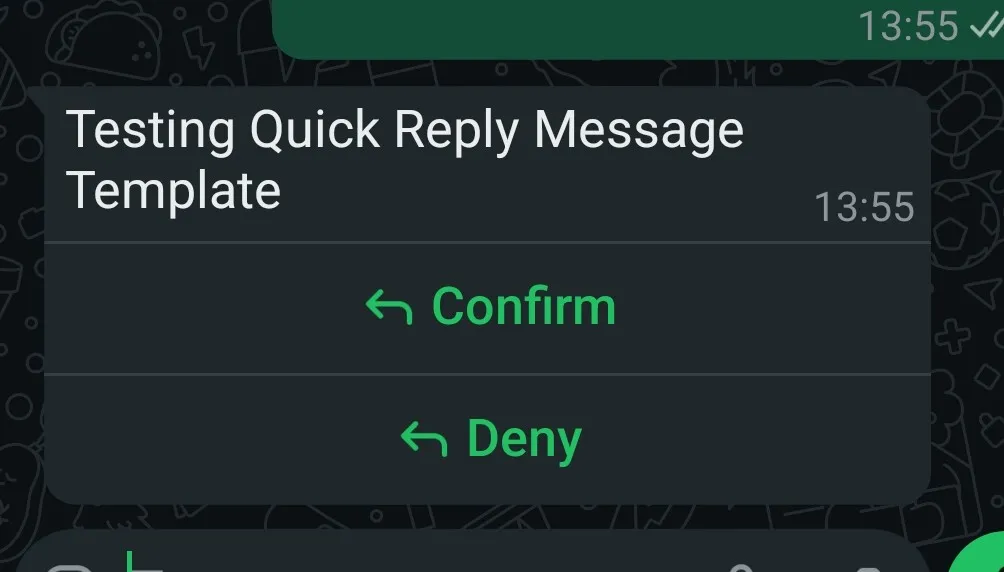
When to use a Twilio Content Template Message
Section titled “When to use a Twilio Content Template Message”You should use a Twilio Content Template Message when you want to create a multi channel Scenario in OpenDialog that requires sending rich media content or structured messages to users, using Twilio’s sub account. This type of message is ideal for scenarios where you want to:
- Send rich media content to users, such as images, videos, or buttons.
- Create interactive messages that allow users to take actions directly from the message.
- Enhance user engagement by providing a more visually appealing and informative message format.
- Send messages that require a structured format, such as notifications, alerts, or promotional content.
- Utilize Twilio’s capabilities to deliver messages across various channels, including SMS, WhatsApp, and more.
How to create a Twilio Content Template Message
Section titled “How to create a Twilio Content Template Message”Via the custom message in Message Editor
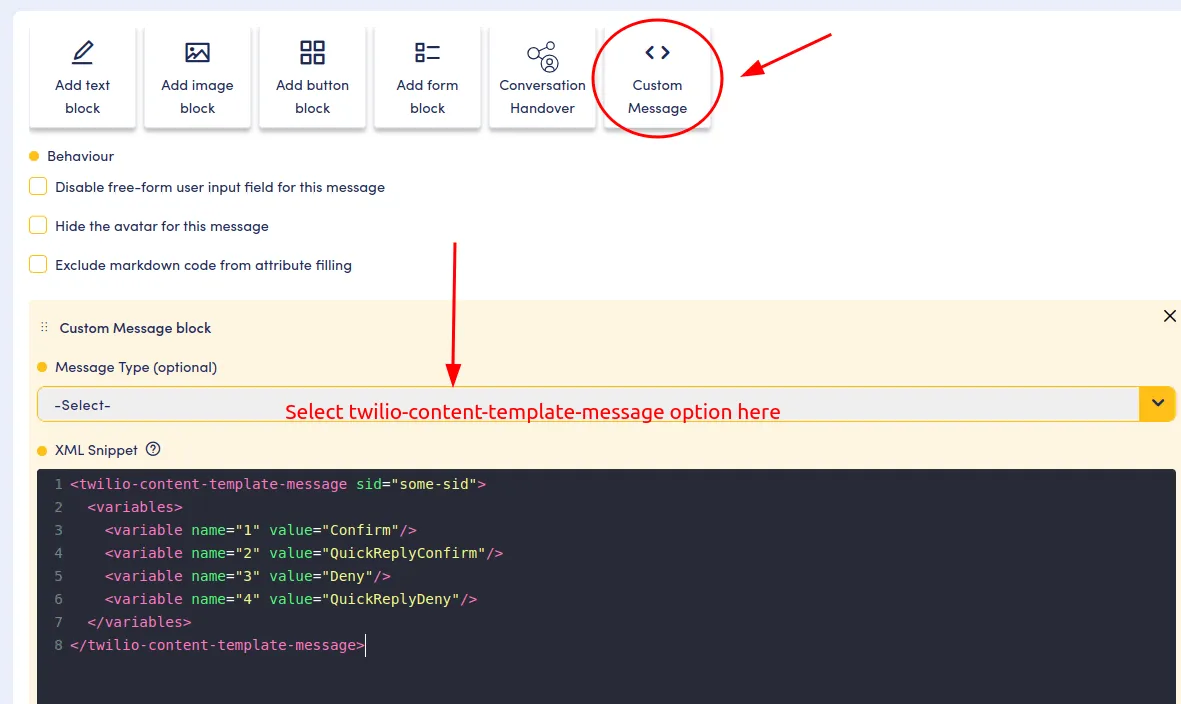
Section titled “Via the custom message in Message Editor”Navigate to the Message Editor and create a Custom Message. Copy the XML snippet at the bottom of this page into the black box, or select twilio-content-template-message from the drop down, and your chat message will appear in the Preview panel.
XML Snippet
Section titled “XML Snippet”<twilio-content-template-message sid="some-template-id" name="some-template-name"> <variables> <variable name="body" value="This is the body of the message"/> <variable name="button_1_text" value="Button 1 text"/> <variable name="button_1_value" value="Button 1 callback"/> </variables></twilio-content-template-message>Parameters
Section titled “Parameters”| Name | Type | Description |
|---|---|---|
sid | string | The unique identifier of the Twilio Content Template to use for rendering. Required if name is not present. |
name | string | The name of the Twilio Content Template to use for rendering. Required if sid is not present. |
variables | object | A collection of variables to pass to the template for rendering. |
Supported Twilio Content Templates Types
Section titled “Supported Twilio Content Templates Types”- Twilio Text Content
This is the standard Twilio text content message. You don’t need to use template for this as the standard Open Dialog text message will suffice. - Twilio Quick Reply Content
This is the standard Twilio button actions message for a quick reply. It is similar to Open Dialog’s button message, but it only supports button actions and no external links. You can parameterize the message with parameters like the body of the message, button text, button action. - Twilio Call to Action Content
This is similar to a button message, but it provides options to open external link, call a phone number, copy promo code. - Twilio Card Content
This allows for media to be sent in a message. - Twilio Carousel Content
This allows for a multiple cards in a horizontally scrollable carousel.