# The "Start from Scratch" AI Agent

OpenDialog offers a solid starting point for your AI Agents in the form of the AI Agent "Start From Scratch" Scenario.

This scenario handles all the standard chat management functionality (start, restart, end, session expire), provides a welcome message and also a flexible and easy to expand Topics conversation which you can use as your own starting point.

This is a similar scenario to the one created by the [Quick Start AI Agent](/getting-started-1/quick-start-ai-agents/quick-start-ai-agent.md) process but it avoids any knoweldge source or topic configuration - enabling you to start from scratch!

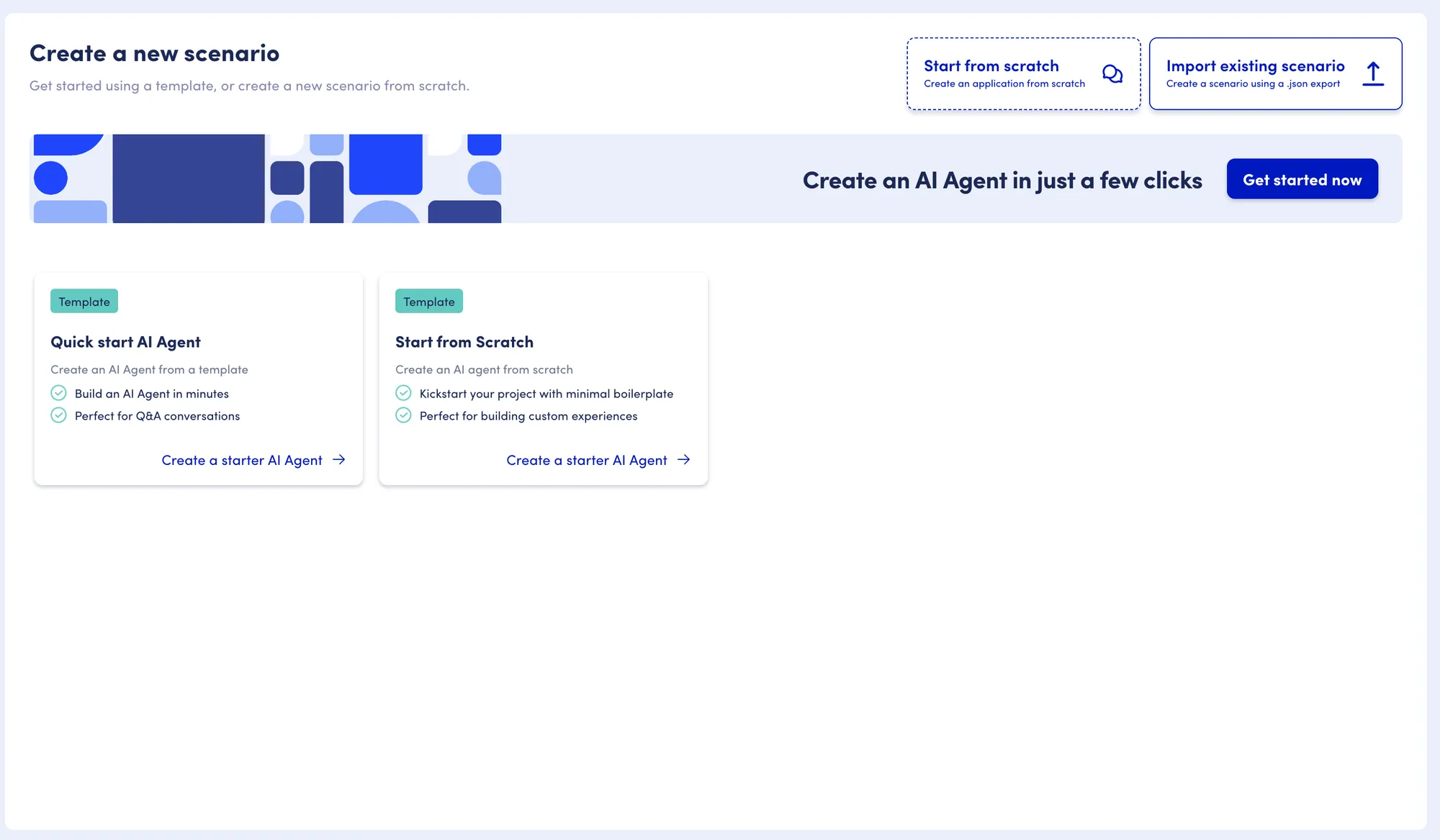
You can create a start from scratch scenario by visiting the Create Scenario Page and selecting Start from Scratch.
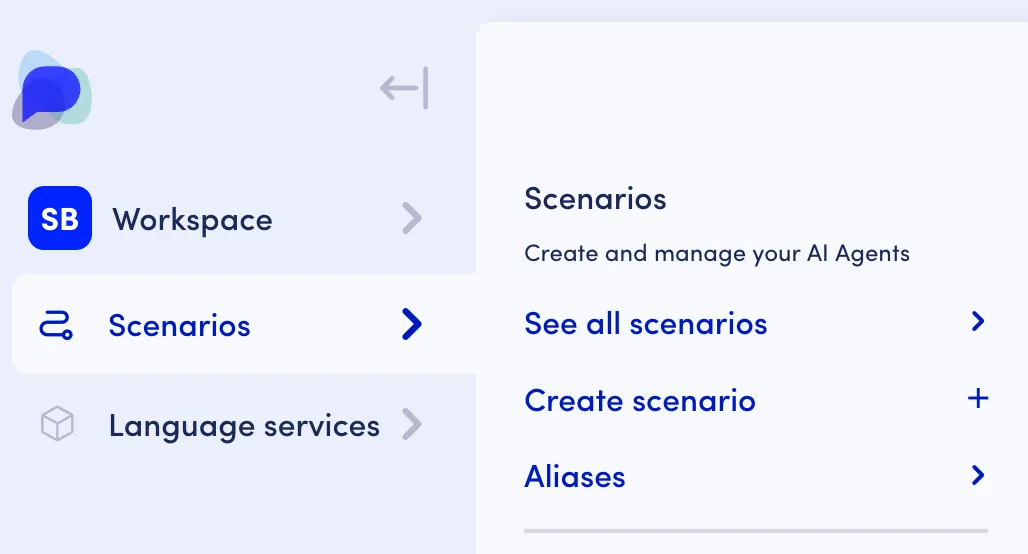
<div align="left"><figure><img src="/files/XQ0FrzRxuqEWqEmk3wh0" alt="" width="375"><figcaption><p>Create Scenario Link</p></figcaption></figure></div>

<figure><img src="/files/j0HJKdf8CPtwdmJSN2cM" alt=""><figcaption><p>Start from Scratch Scenario</p></figcaption></figure>

## Scenario Structure

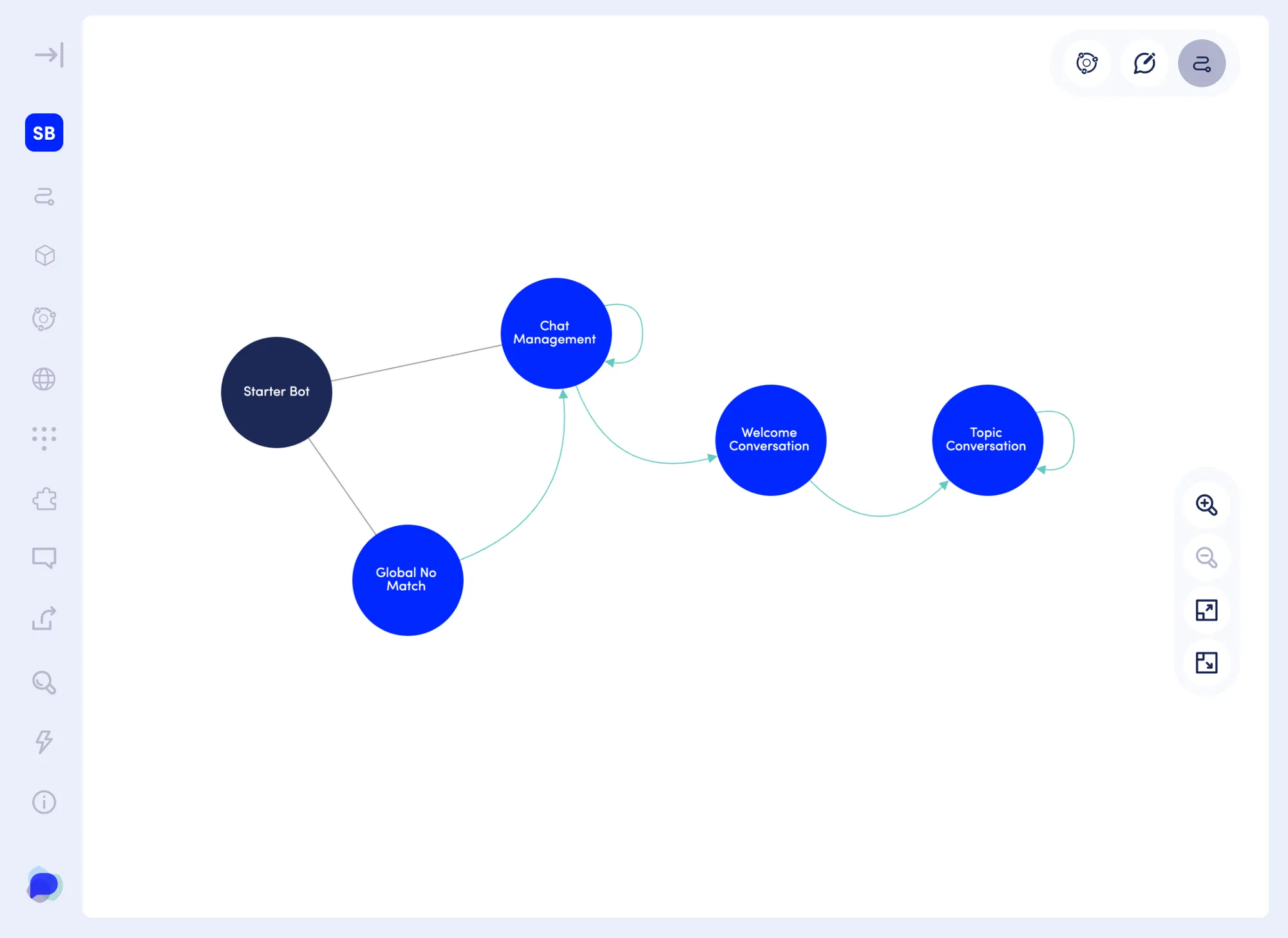
<figure><img src="/files/P7rhYLzNL08FPJvb8eTc" alt=""><figcaption><p>The Start From Scratch Conversations and Flows</p></figcaption></figure>

The "Start From Scratch" has four Conversations:

* Chat Management: handles all the standard management functionality of start, restart, end and session expire
* Global No Match: A global no match conversation to deal with No Matches from our interpreters if they are not specifically dealt with in other conversations. You can learn about the No Match intent [here](/opendialog-platform/conversation-designer/conversation-design/conversational-patterns/building-robust-assistants/contextual-no-match-pattern.md).
* Welcome: A welcome conversation that has a single, generic welcome message
* Topic Conversation: A topic conversation that provides a generic structure for handling a multitude of different topics.

In addition the scenario creates a Semantic Classifier that is used by the Topic Conversation - again a solid starting point for your own Classifiers.

As you can see from the image above the entry point to the scenari is Chat Management. The context then gets redirected to the Welcome Conversation, where we send a welcome message, and we then move to the Topic Conversation where we will be dealing with any requests from the user.

{% content-ref url="/pages/LLk4FA4UwwS9oTdc2mlL" %}
[Chat Management Conversation](/getting-started-1/quick-start-ai-agents/the-start-from-scratch-ai-agent/chat-management-conversation.md)
{% endcontent-ref %}

{% content-ref url="/pages/vwVvvqUy721gB2flBDst" %}
[Welcome Conversation](/getting-started-1/quick-start-ai-agents/the-start-from-scratch-ai-agent/welcome-conversation.md)
{% endcontent-ref %}

{% content-ref url="/pages/jMQZnpOPLVErVLPETyCR" %}
[Topic Conversation](/getting-started-1/quick-start-ai-agents/the-start-from-scratch-ai-agent/topic-conversation.md)
{% endcontent-ref %}

{% content-ref url="/pages/YLYp4V1ehhvvytPwYBR9" %}
[Global No Match Conversation](/getting-started-1/quick-start-ai-agents/the-start-from-scratch-ai-agent/global-no-match-conversation.md)
{% endcontent-ref %}

{% content-ref url="/pages/OIoj1xgFc00hd0nsxEMR" %}
[Supporting LLM Actions](/getting-started-1/quick-start-ai-agents/the-start-from-scratch-ai-agent/supporting-llm-actions.md)
{% endcontent-ref %}

{% content-ref url="/pages/GwEPMReKh8yQLZgevlfB" %}
[Semantic Classifier: Query Classifier](/getting-started-1/quick-start-ai-agents/the-start-from-scratch-ai-agent/semantic-classifier-query-classifier.md)
{% endcontent-ref %}


---

# Agent Instructions: Querying This Documentation

If you need additional information that is not directly available in this page, you can query the documentation dynamically by asking a question.

Perform an HTTP GET request on the current page URL with the `ask` query parameter:

```
GET https://docs.opendialog.ai/getting-started-1/quick-start-ai-agents/the-start-from-scratch-ai-agent.md?ask=<question>
```

The question should be specific, self-contained, and written in natural language.
The response will contain a direct answer to the question and relevant excerpts and sources from the documentation.

Use this mechanism when the answer is not explicitly present in the current page, you need clarification or additional context, or you want to retrieve related documentation sections.